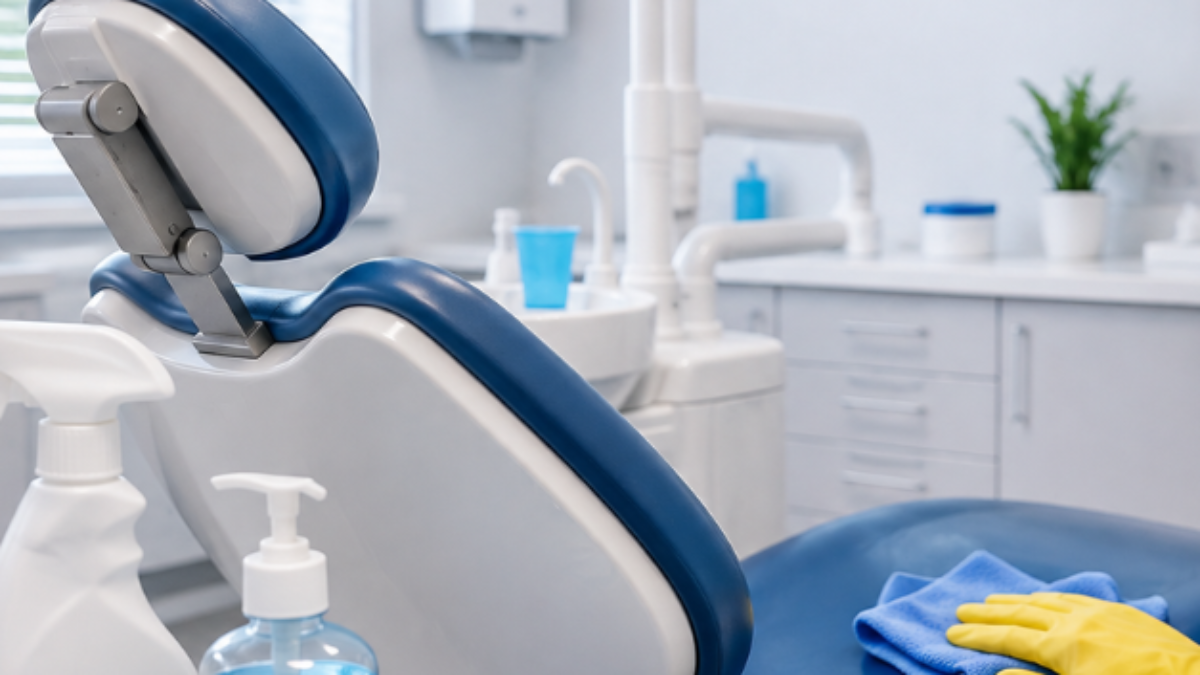
Walk into a dental office, and you will probably notice the obvious things first: a clean reception desk, fresh floors, tidy treatment rooms, and a bathroom that does not look like it has seen better days. But professional dental cleaning goes much deeper than appearances.
A dental practice is a healthcare environment. Staff work with patients, saliva, blood, instruments, and frequently touched surfaces throughout the day. That means cleaning requires a thoughtful process, appropriate products, trained workers, and consistent routines.
For practices considering medical office cleaning in Wilmington NC, understanding what a professional service actually provides can make the hiring decision much easier. The goal is not simply to make the office sparkle. It is to maintain a clean environment while supporting the practice’s infection-prevention procedures.
So, what should you expect from a professional dental office cleaning service? Let’s break it down without drowning you in cleaning jargon.
What Makes Dental Office Cleaning Different?
A dental office has several types of spaces, each with different cleaning requirements.
A reception area needs routine housekeeping and attention to frequently touched surfaces. Treatment rooms require more careful cleaning and disinfection because procedures can expose surfaces to patient materials. Restrooms and staff areas need their own cleaning routines.
The CDC distinguishes between clinical contact surfaces and general housekeeping surfaces in dental settings. Clinical contact surfaces can include light handles, switches, countertops, drawer handles, faucets, computers, and doorknobs. These surfaces can become contaminated during patient care and require appropriate cleaning and disinfection procedures.
That distinction explains why dental office cleaning should not follow the same checklist used for a typical administrative office.
What Should You Expect From Professional Dental Office Cleaning?
1. A Cleaning Plan Based on the Facility
A professional cleaning company should first understand the dental practice instead of arriving with one generic checklist for every customer.
The cleaning plan may consider:
- Number of treatment rooms
- Reception and waiting areas
- Restrooms
- Staff areas
- Flooring and other surfaces
- High-touch areas
- Cleaning frequency
- Areas that may experience contamination
- Responsibilities between the cleaning company and dental staff
OSHA states that healthcare workplaces should establish appropriate cleaning and decontamination schedules based on factors such as location, surface type, contamination, and the tasks performed in that area.
This initial assessment helps create a realistic routine instead of promising that one cleaning method will work everywhere.
2. Cleaning Before Disinfection
One of the most important concepts in healthcare cleaning is also one of the easiest to misunderstand.
Cleaning and disinfecting are not the same thing.
Cleaning removes dirt, debris, and organic material from a surface. Disinfection uses an appropriate product to destroy or inactivate many microorganisms that remain.
The CDC explains that visible soil and organic material can interfere with the effectiveness of disinfection, which is why proper cleaning matters before disinfection.
For example, wiping a visibly dirty countertop with disinfectant does not magically turn the dirt into a clean surface. The surface needs the appropriate cleaning process first.
A professional team should follow product directions carefully, including dilution, application instructions, and required contact time.
3. Careful Attention to High-Touch Areas
Some surfaces deserve extra attention simply because people touch them repeatedly.
In a dental practice, these may include:
- Door handles
- Light switches
- Countertops
- Drawer handles
- Faucet handles
- Reception surfaces
- Phones
- Computer equipment
- Dental chair controls
The CDC identifies several of these as clinical contact surfaces because they can become contaminated during dental procedures.
A professional cleaning routine should account for these areas rather than focusing only on visible dust and dirt.
After all, a spotless corner nobody touches is nice. A frequently handled door handle that gets ignored? Not so impressive.
4. Appropriate Cleaning of Floors and General Areas
Floors, walls, sinks, and other housekeeping surfaces still require regular care. However, they do not necessarily need the same treatment as clinical contact surfaces.
CDC guidance notes that most housekeeping surfaces in dental settings generally require routine cleaning, with the specific approach depending on the surface and the type or amount of contamination.
This is where experienced janitorial services in Wilmington NC can add value. The team should know when routine cleaning makes sense and when a surface requires additional attention because of contamination.
The objective is not to use the strongest chemical on everything in sight. It is to use the appropriate method for the situation.
Zone-by-Zone: What a Professional Dental Office Clean Covers
Professional dental office cleaning isn’t a single uniform process applied across the facility. It’s a zone-differentiated protocol where each area receives the appropriate cleaning tier based on its actual contamination risk.
1. Treatment Operatories: The Highest-Risk Zone
Operatories generate the most contamination, the greatest aerosol load, and the highest density of clinical contact surfaces. Professional cleaning here covers:
Between every patient (clinical staff responsibility):
- Full disinfection of all clinical contact surfaces using an EPA-registered, intermediate-level disinfectant with tuberculocidal activity
- Removal and replacement of surface barriers (plastic wrap on light handles, unit controls, chair headrest)
- Dental unit waterline flushing for 20–30 seconds, a specific CDC requirement to reduce biofilm accumulation in the narrow-bore tubing
- Single-use item disposal in appropriate waste streams
End-of-day professional cleaning:
- Full operatory surface disinfection including harder-to-reach areas: underside of bracket tables, base of chair, suction tubing connections
- Overhead light handle cleaning including articulating arm mechanisms
- Spittoon and suction trap cleaning
- Floor disinfection operatory floors fall within the splash zone and require disinfection, not just mopping
2. Sterilization Area Where Cross-Contamination Risk Is Highest
The sterilization area processes instruments through a strictly unidirectional workflow: soiled instruments in one end, sterilized instruments out the other. Cross-contamination between dirty and clean zones here compromises every instrument that passes through.
Professional cleaning in the sterilization area means maintaining the directional integrity of the workflow, never cleaning “clean” storage areas with the same tools used in “dirty” receiving areas, ensuring all countertop and equipment surfaces receive regular disinfection, and not disturbing the organized instrument flow.
3. Reception and Waiting Areas Lower Clinical Risk, Not Zero Risk
Patients with active respiratory illness, undiagnosed infections, and communicable conditions move through reception. High-touch surfaces check-in counters, door handles, waiting room chairs, check-in tablets require regular disinfection throughout the day, not just end-of-day attention.
Professional office cleaning services in Jacksonville and the broader coastal Carolina market are seeing increased demand specifically for scheduled mid-day cleaning visits to dental reception areas, reflecting the understanding that once-daily cleaning isn’t sufficient for high-turnover patient-facing spaces.
4. Staff Areas Important But Different
Staff break rooms, restrooms, and administrative offices require regular professional cleaning but at housekeeping-level disinfection rather than the intermediate-level disinfection applied to clinical contact surfaces. The distinction matters for product selection and protocol.
What the Timeline of a Professional Dental Office Clean Looks Like
Understanding the cleaning timeline helps practice managers set accurate expectations and identify gaps in what they’re currently receiving.
During operating hours (clinical staff responsibility):
- Operatory disinfection between every patient
- Waterline flushing between patients and at the start of the day
- Reception high-touch surface disinfection mid-morning and mid-afternoon minimum
- Immediate cleanup of any body fluid incidents using appropriate products and PPE
End of day (professional cleaning service):
- Full operatory cleaning and disinfection including difficult-access areas
- Sterilization area cleaning following unidirectional workflow protocol
- Bathroom deep disinfection
- Reception and waiting area cleaning and disinfection
- Floor care throughout; mop and disinfect all clinical and semi-clinical areas
- Trash removal, including regulated waste container handling compliance
- Restocking consumables (soap, paper towels, sanitizer dispensers)
Weekly professional deep cleaning:
- Detailed cleaning of dental chair mechanisms and upholstery
- Thorough cleaning under and behind dental units and cabinetry
- Window and glass cleaning
- High-surface dusting (tops of cabinetry, HVAC vents, light fixtures)
Monthly deep cleaning:
- HVAC filter inspection and replacement; dental offices generate significantly more particulate load than standard offices
- Grout and tile deep cleaning in bathrooms and sterilization areas
- Equipment exterior cleaning of autoclaves, ultrasonic cleaners, and compressors
- Full floor restoration including edge and corner cleaning that daily mopping misses
This layered schedule is what professional medical office cleaning in Wilmington NC, structure their service agreements around because a dental office that only receives a single daily clean without defined weekly and monthly deep cleaning tiers is running a reactive protocol, not a proactive one.
Red Flags: When a Cleaning Service Isn’t Right for Your Practice
Watch for these warning signs:
- No healthcare references: If they can’t name dental or medical clients, they likely lack the required training.
- Generic cleaning products: Household-grade disinfectants don’t meet CDC standards for dental offices.
- Rotating staff: Inconsistent teams lead to missed protocols and oversights.
- No written cleaning specification: You should receive a customized plan, not a cookie-cutter package.
- Unwilling to work after hours: If they can’t accommodate your schedule, they’ll disrupt patient flow.
If you’re evaluating office cleaning services in Jacksonville, apply the same criteria. Don’t compromise on training or products to save a few dollars.
Interesting Read : How Proper Floor Cleaning Extends the Life of Medical Office Flooring
Common Dental Office Cleaning Mistakes
- Using the Same Cleaning Method Everywhere
Treatment rooms, restrooms, waiting areas, and administrative spaces have different cleaning requirements. - Skipping the Cleaning Step Before Disinfection
Dirt and organic material can interfere with proper disinfection. Clean surfaces appropriately before applying disinfectant when required. - Ignoring Manufacturer Instructions
Disinfectants have specific directions for dilution, application, and contact time. Always follow the product label. - Overlooking High-Touch Surfaces
Door handles, light switches, drawer handles, countertops, and other frequently touched areas need consistent attention. - Using Improper Cleaning Equipment
Reusable cleaning cloths and mop heads can spread contamination if staff do not clean, replace, or manage them properly. - Ignoring Potentially Contaminated Areas
Blood or other potentially infectious materials require appropriate cleaning procedures and worker protection. - Focusing Only on Appearance
A room can look spotless while important surfaces receive inadequate attention. Professional cleaning should focus on both appearance and appropriate infection-prevention practices. - Not Maintaining a Consistent Cleaning Schedule
Without a clear schedule, important tasks can be missed or performed inconsistently.
Choosing the Right Cleaning Company for Your Practice
Finding a company that understands dental environments takes more than reading Google reviews. Ask these questions before signing:
- Do they have healthcare or dental facility experience? Request specifics and references from similar practices.
- Are staff trained on OSHA and bloodborne pathogen protocols? This should be confirmable immediately, not something they need to research.
- Do they use EPA-registered disinfectants for clinical environments? General-purpose cleaners don’t meet dental standards.
- Can they work after hours? Most practices want cleaning done after the last patient leaves.
- Will you have a consistent team? Rotating crews mean constant relearning of your layout and protocols.
- Can they provide dental or medical client references? Any reputable company should have satisfied healthcare clients.
If you’re comparing office cleaning services in Jacksonville, use the same checklist. Healthcare cleaning standards don’t change by city only the local providers do.
How to Evaluate Your Current Dental Office Cleaning Provider
Most dental practices sign a cleaning service agreement once and then passively assume the work is being done correctly. That passive assumption is exactly where cleaning quality gaps develop.
Here are the questions that reveal whether your cleaning provider is actually meeting the clinical standard:
- Can they produce OSHA Bloodborne Pathogens training certification for every staff member who enters your clinical spaces? If not, they’re placing unprotected workers in a regulated environment and creating liability for your practice.
- Can they provide EPA registration documentation for every disinfectant used in your operatories, including proof of tuberculocidal activity?
- Do they maintain a written, zone-specific cleaning protocol for your facility, one that distinguishes clinical contact surface requirements from housekeeping surface requirements?
- Do they document completed cleaning activities? A written log recording what was cleaned, with what product, at what time, by whom, is both a compliance asset and protection in any regulatory inspection or patient complaint.
- Do their staff understand regulated waste? Cleaning personnel entering clinical dental spaces must know how to identify, handle, and avoid disturbing sharps containers and regulated medical waste and must understand they never open, compress, or empty sharps containers under any circumstances.
- Can they provide references from other dental practices in your specific market? Dental cleaning experience with a practice in Jacksonville, NC is more relevant than commercial cleaning experience with an office building.
Professional janitorial services in Wilmington NC, that specifically serve healthcare and clinical clients answer every one of these questions confidently, and the ones who hesitate or can’t answer specifically are telling you something important about their actual preparation for your environment.
Conclusion
A professional dental office cleaning service should deliver much more than a shiny floor and a pleasant-smelling reception area. It should provide a structured approach that considers clinical contact surfaces, housekeeping areas, high-touch points, contamination risks, worker safety, and the dental practice’s own infection-prevention procedures.
For practices searching for medical office cleaning in Wilmington NC, the right provider should offer clear procedures, trained staff, appropriate products, and consistent service.
Whether you are comparing office cleaning services in Jacksonville or researching janitorial services in Wilmington NC, ask about experience, cleaning plans, safety procedures, and accountability before making a decision.
A clean dental office starts with good habits and good systems. When both work together, the result is an environment that looks professional, supports daily operations, and helps create a better experience for patients and staff.
Frequently Asked Questions
1. What is included in professional dental office cleaning?
Services vary, but professional cleaning may include floors, restrooms, waiting areas, staff spaces, high-touch surfaces, dusting, waste removal, and other agreed-upon environmental cleaning tasks.
2. Does dental office cleaning include instrument sterilization?
Generally, environmental cleaning and instrument processing are separate responsibilities. Dental instruments require specialized reprocessing procedures performed by appropriately trained dental healthcare personnel.
3. Is cleaning the same as disinfecting?
No. Cleaning removes dirt and organic material, while disinfection uses an appropriate chemical process to reduce microorganisms on suitable surfaces. Proper cleaning can improve the effectiveness of subsequent disinfection.
4. Do dental offices need to disinfect every surface?
Not necessarily. Different surfaces have different risks and cleaning requirements. The CDC distinguishes clinical contact surfaces from general housekeeping surfaces and recommends procedures appropriate to each type.
5. What should cleaning workers wear in a dental office?
PPE depends on the task and potential exposure. OSHA requires employers to determine occupational exposure and provide appropriate protections when employees may encounter blood or other potentially infectious materials.
6. Can a general commercial cleaning company clean a dental office?
A general company may be capable of providing some services, but dental practices should verify that the provider understands healthcare cleaning, contamination risks, appropriate products, PPE, and applicable procedures before hiring.
Learn More : How Airbnb Cleaning Helps You Get Better Guest Reviews

Leave A Comment