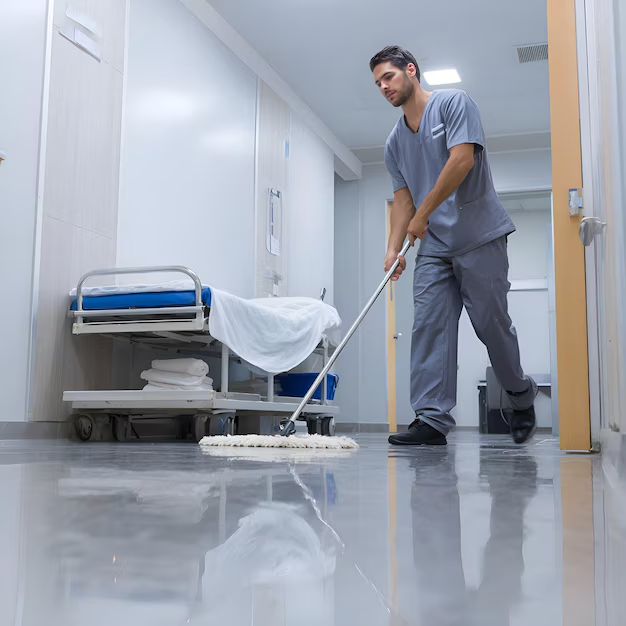
Walking into a doctor’s office, have you ever noticed dusty surfaces, dirty floors, or unclean waiting areas? You’re not alone. Patients are voicing dissatisfaction about the lack of cleanliness in a healthcare facility. These complaints are damaging a practice’s income and reputation. The right medical office cleaning services in Wilmington can keep you compliant with regulations and protect the safety of patients, and help you to build trust with patients. This guide will help you understand the primary complaints of patients in healthcare facilities, how to choose a cleaning service, and how to remedy the impact of cleaning-related challenges.
What Are Medical Office Cleaning Services?
Cleaning offices in the medical field is a part of workplace cleaning services that concentrates on cleaning and sanitizing functions in medical and healthcare offices. In contrast to regular office cleaning services, workplace cleaning services have to ensure compliance with medical-grade disinfection, healthcare regulations, OSHA, CDC, and other applicable rules and regulations.
The cleaning and disinfection services do more than cleaning carpets and removing dust. Services that are available include:
- Cleaning and disinfection of doorknobs, exam tables, and chairs in the waiting rooms
- Cleaning and removal of biohazard waste
- Cleaning and sanitizing of restrooms and other areas where patients are cared for
- Cleaning the floors with chemicals that are approved for use in hospitals and other healthcare facilities
- Management of the quality of the air in the workplace, and cleaning of the HVAC systems
Medical office cleaning services in Wilmington are available for dental practices, medical offices, urgent care medical centers, and specialized clinics.
Why Medical Office Cleanliness Matters
Cleanliness in healthcare settings directly impacts patient outcomes, staff morale, and your practice’s bottom line.
Patient Safety: Healthcare-associated infections (HAIs) affect 1 in 31 hospital patients daily, according to the CDC. Proper cleaning reduces pathogen transmission and protects vulnerable patients.
Regulatory Compliance: Medical facilities must meet strict standards. Failure to maintain cleanliness can result in failed inspections, fines, or even closure.
Patient Trust and Retention: 94% of patients say they’d switch providers after a negative experience—and a dirty office tops that list. First impressions matter, and a spotless facility signals professionalism and care.
Staff Productivity: Clean environments reduce sick days and boost employee satisfaction. Your team deserves a workspace that supports their health.
Top 10 Complaints About Medical Office Cleaning
Understanding common complaints helps you identify red flags early and choose the right cleaning partner.
Here are some operational issues that your practice still has, and which are dated and out of touch. At some point, you will need to adopt best practices and cleaning standards in order to avoid further damage to your reputation and to avoid liability. Here are some of the key issues:
1. Irregular and Unpredictable Cleaning and Maintenance Schedules
When multiple people, and therefore multiple patients, see a cleaning and maintenance issue, that issue is becoming a liability for the practice. Irregular cleaning schedules damage the practice, and demonstrate to the patients that attention to cleaning and maintenance issues is not a priority for the staff, and also indicate that cleaning issues are not a priority for the practice.
2. Cleaning of Touch Point Areas
Specific high-traffic areas at the practice regularly need to stay disinfected, and therefore, if a cleaning service is skipping these areas, it places patients at risk for the practice to have an out-of-control infectious disease.
3. Toilet Restroom Cleaning (In the Office)
Practices often fail to realize that the cleaning of the toilet restrooms is also important, and therefore, in order to avoid damage to the reputation of the practice, the cleanliness of the toilet restrooms must be kept at a high standard to avoid neglect to the cleanliness of the toilet restrooms.
4. Uncleaned Dust and Cobwebs
Neglecting areas, including, but not limited to, dust on vents, baseboards, and frames, will cause patients to assume that all areas, including, but not limited to, exam rooms, are unkempt and unclean. Dust and neglect of areas demonstrates to patients a lack of attention to cleaning and maintenance issues that will result in the practice facing multiple lawsuits.
5. Unqualified Cleaning Staff
Cleaning staff of the practice who do not understand medical protocols, practices, or who also do not dress in medical scrubs pose liability concerns. Unqualified cleaning staff and uncleaned surfaces will cause multiple issues for the practice, including patient dissatisfaction and lawsuits.
6. Use of Harsh or Unsafe Chemicals
Strong chemical smells can cause allergies or asthma. Medical-grade, eco-friendly products are safer for everyone.
7. Lack of Communication
Cleaning teams’ failure to communicate broken equipment or low supplies can amplify small problems into big headaches.
8. Failure to Follow HIPAA Guidelines
Untrained cleaners may mishandle documents or breach privacy when they clean.
9. No Quality Control or Inspection Process
Cleaning quality drifts over time without audits. You need systems to ensure consistent standards.
10. Hidden Costs and Contract Issues
Medical office managers are annoyed when contracts are vague, unexpected charges appear, or there’s pressure to sign long contracts with no trials.
How to Rank and Evaluate Cleaning Companies
Not all cleaning services are created equal. Here’s how to separate the professionals from the pretenders.
1. Verify Medical Cleaning Credentials
Inquire about the company’s certifications regarding bloodborne pathogens, OSHA compliance, and infection control. Responsible commercial cleaning companies have no problem providing this documentation.
2. Check the References of Other Medical Facilities
Request references for cleaning contracts from healthcare facilities. In particular, check their reliability, detail orientation, and emergency response.
3. Assess Their Cleaning Protocols
Do they follow a checklist? How often do they disinfect high-touch surfaces? Understanding their Medical Office Cleaning: Easy Guide to Disinfection and Sterilization Standards approach reveals their expertise level.
4. Look Into Insurance and Bonding
For your safety, just in case something goes wrong, medical offices need their cleaners to have full liability insurance and workers’ comp.
5. Gauge Their Communication
Communication during the cleaning process predicts the level of service they will provide. If you need to talk to the cleaners, will they answer? What if you need to speak with them outside of regular cleaning hours? Prompt communication during the sales process is key to good cleaning service.
6. Look at Value, Not Costs
For good commercial cleaning services in Jacksonville and Wilmington, the right cleaning services come at the right price. Businesses should be paying for value, not just the lowest price. Businesses need to pay for top quality.
7. Ask About Short-Term Contracts
Good cleaning services in Jacksonville and Wilmington provide contracts as short as 30 to 60 days so you can evaluate their work before you sign a long term contracts. This shows that they have confidence in the quality of their service.
Common Misconceptions About Medical Office Cleaning
Let’s clear up some myths that lead practices to make poor cleaning decisions.
Myth: Any cleaning business can clean medical facilities.
Truth: Medical facilities cleaning involves specialized training of infection control, disposal of biohazards, and compliance with medical cleaning regulations. Standard office cleaning does not involve these.
Myth: Cost is the most important.
Truth: The lowest price means less training, less quality cleaning supplies, and less insured cleans. Poor cleaning means more in, cleans more in regulate fines, patient lawsuits, and infection spread.
Myth: Cleaning can be done once a week.
Truth: Medical facilities cleaning involves specialized training of infection control, disposal of biohazards, and compliance with medical cleaning regulations. Standard office cleaning does not involve these.
Myth: Eco-friendly products do not work.
Truth: EPA and CDC standards are modern, eco-friendly disinfectants. There are many available to be used by facilities with patients who have compromised immune systems.
Recovery Strategies After Cleaning Complaints
If patients have complained or you’ve noticed declining standards, here’s how to turn things around.
1. Begin With An Audit: Document with photos problem areas where immediate action is needed.
2. Reach Out To Your Vendor: Rather than switching to another provider, offer your current vendor an opportunity to address the issue. There are instances where the gaps are due to an unmet expectation.
3. Draft a Contract: Design a list by task, frequency, and standard so that there is no ambiguity.
4. Set Up a Quality Control System: Establish a system for monitoring clinical cleaning, such as checklists, random spot checks, and patient satisfaction surveys.
5. Make the Change to Medical Office Cleaning Services Wilmington: When all else fails, change to a company that has a proven track record in healthcare for cleaning.
6. Maintain Cleanliness: Staff should be trained on proper etiquette for keeping a space clean in order to keep the space clean until the next professional cleaning.
7. Respond To The Complaints: Patient Trust can be rebuilt by being open to the improvements that have been made.
Best Practices for Maintaining Medical Office Cleanliness
Follow these tips to ensure your facility stays spotless and compliant.
- Schedule cleaning during off-hours to help reduce disruption and help improve cleaning quality.
- Place cleaning supplies in easily accessible places for quick spill clean-up.
- Change deep cleaning assignments each month (shampooing carpets, cleaning windows, cleaning air vents) to have a better variety.
- Put hand sanitizer stations in all areas to add to the cleaning that will be done by the janitor.
- Make it a regular task to do cleaning inspections with the cleaning companies you hire to help look at cleaning standards and help adjust as needed.
- Companies you work with should be updated regularly on the CDC standards in order for you to stay up to date.
- Get quality mats at the entrance to help reduce the amount of dirt and moisture that is brought in.
- Make it clear which waste container is for regular trash and which is to be used for biohazard waste to help reduce contamination.
FAQ
1. How often do medical practices need to be cleaned professionally?
Most medical practices need daily cleaning of the patient areas, bathrooms, and traps on the surfaces. Exam rooms need to be disinfected between patients. The entire facility needs to be cleaned weekly or bi-weekly, depending on how many patients are seen.
2. How do medical cleaning offices differ from other cleaning offices?
Cleaning offices differs from medical cleaning because medical cleaning requires special training on how to control infections, the regulations of the health care system (OSHA, CDC), how to manage biohazard waste, and the use of disinfectants that are medical grade. Commercial cleaning services in Jacksonville or other commercial cleaning offices will most likely not have such qualifications.
3. How much does it cost to get your medical office cleaned in Wilmington?
The cost can depend on size, frequency, and type of services needed. For small to medium practices, it may cost about $200-$800+ monthly. Ask several commercial cleaning company providers to get value and not just price.
4. Is it possible to use my usual office cleaner to clean my medical practice?
Not advisable. Medical practices deal with infection control, regulatory compliance, and patient safety. These issues demand specialized knowledge. Applicable untrained cleaners heighten risk and liability.
5. What details are important in a medical cleaning contract?
Be sure the contract includes the details of the services, the frequency of cleaning, types of cleaning products, if the contract includes a performance guarantee, what the cancelation terms are, what insurance the company holds, and how pricing is laid out. Contract vagueness and missing trial periods are signs of a bad contract.
6. What do I do in a cleaning emergency? (e.g., a bodily fluid spill)
Your cleaning service should have emergency protocols and 24-hour emergency contact numbers for staff for scenarios that may qualify as a biohazard. While waiting for the cleaning crew, you need to restrict access to the area and avoid contact as well. If staff are trained to use spill kits, they may use them to avoid contact. Never clean or attempt to clean a spill without proper clean-up equipment and training.
Conclusion:
There is no downside to keeping your practice clean, as it prevents the spread of infection, is a requirement of the law, and is necessary for the practice to be successful. If you know the common issues, assess your providers, and invest in some second-chance strategies, you will be able to handle your office’s cleaning in a way that causes you to gain a competitive edge.
Don’t wait for complaints to pile up. Start by auditing your current cleaning situation, creating clear standards, and partnering with qualified medical office cleaning services in Wilmington that understand healthcare’s unique demands.
How clean do you want your practice to be? Reach out to specialists in medical office cleaning, try their services, and witness the difference that cleaning in accordance to your medical practice’s standards provides your clients, and for your own alleviation of the stress.
Also Learn More : How a Daycare Cleaning Service Reduces Illness Outbreaks in Classrooms

Leave A Comment